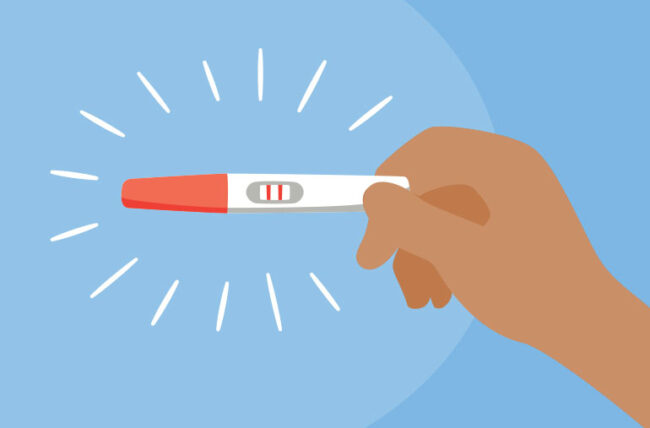
It’s hard to imagine a situation that can cause more stress than a late period. pregnancy is the most obvious cause, but other factors can also be at play.
Erin Higgins MD explains the reasons why periods are late and what you should do if it is not your period.
How late can you make a period?
Most people have some variation in their periods. Don’t worry if you have a late period.
Dr. Higgins explains that your menstrual cycle is measured by the time between your first period and your first period of your next period. These cycles can last anywhere from 21 to 35 day, on average.
A 28-day period one month followed by a 26 day cycle the following month is nothing to be concerned about. Your period may be late if you:
- Your last period has been over 35 days.
- Your period is over three days late, even though you’re usually very regular.
There are many reasons why your period may be late
There are many reasons why your period may be late. Let’s discuss the factors that may delay your monthly cycle.
1. Pregnancy
Each month, when you are not expecting, your body sheds your uterus’s lining. When you get your period, this is what happens.
When you are pregnant, your uterus lining — the place where the fertilized eggs attach and grow — becomes thicker and has more blood vessels. Your body does not shed the lining when you have a period. Instead, it continues to build that lining in order to nourish and support the growing fetus.
2. Extreme diets and exercises
Regular exercise and a healthy diet can make a huge difference to your health. Overdoing can cause your period to be temporarily halted.
Dr. Higgins explains that athletes who exercise hard, or anyone who does not consume enough calories can stop menstruating. It’s your body telling you it does not have the resources to sustain a pregnancy.
Secondary Amenorrhea occurs when your period stops due to diet, exercise or weight loss. It means that you used to have periods but they stopped. Secondary amenorrhea is caused by:
- Eat an extreme, calorie-restricted diet.
- Anorexia and bulimia are examples of an eating disorders.
- You can lose a lot weight in a very short time.
- Train hard for a Marathon.
3. PCOS (Polycystic Ovary Syndrome)
PCOS causes a hormonal imbalance which interferes with the body’s ability of releasing an egg. You won’t get a period if you don’t ovulate.
Dr. Higgins says that “many people with PCOS experience irregular, late, or missed periods.” PCOS can also cause:
- Acne.
- Excess facial and body hair.
- Hair loss is a common problem.
- Weight gain or difficulty losing weight
When necessary, healthcare providers will perform medical tests and check your symptoms to diagnose PCOS. can manage symptoms with medication and lifestyle changes.
4. Stress
Stressing out can affect your mental health. Stress can cause physical symptoms, including irregular or delayed periods.
Dr. Higgins says that minor stressors won’t usually affect your period. Stress can affect your hormone balance. This may cause your period to be late.
Examples of stress that is major include:
- Death or a loved-one.
- Exams for high school or college.
- Stress at work, such as job loss or a toxic workplace.
- Life-changing events like marriage or divorce are major life events.
5. Hormonal contraception
Hormonal Contraceptives are hormone contraceptives that contain progestin, or a combination progestin/oestrogen. These two hormones work together to prevent pregnancy.
This is when you have your hormone-free week with the a href=”https://my.clevelandclinic.org/health/drugs/3977-birth control-the pill”>pill/a>, ring or patch. You can do this by using the pill, band or patches. If you continue to take birth control (so you skip your hormone-free period), you may experience some light spotting, or even no period.
Dr. Higgins says that it is usually safe to skip a period when you are taking hormonal contraceptives. But, before you do, check with your doctor to make sure you can.
What happens if you are using a different form of birth-control like an IUD or contraceptive implants?
Dr. Higgins states that “Amenorrhea can be common and is safe for women who use the hormone IUD.” It can also happen with Nexplanon(r), and Depo-Provera (r), but it is less common.
6. Thyroid conditions
The thyroid is located at the base your neck. It’s a butterfly-shaped organ that helps to regulate your period. You may have a delayed period if your thyroid gland is overactive or underactive.
Dr. Higgins states that thyroid problems are very common and affect more than 10% who menstruate. They can cause irregular or missed periods, but are often mistaken as menopause.
7. Perimenopause
Perimenopause or the transition between reproductive years and menopause can last for a few months or even a couple of years. It could also take several years. Your cycle may be erratic, with 25 days in one month and 29, the next.
The average age for menopause, is 51. Perimenopause usually begins in the 40s or 50s. Perimenopause is often accompanied by other symptoms such as:
- Hot Flashes.
- Insomnia.
- Changes in mood.
- Cramping.
- Night Sweats.
- Vaginal Dryness.
Dr. Higgins says that irregular periods during perimenopause is common. However, if you notice your periods getting heavier and closer together, consult your doctor so they can help you to find relief.
8. Youth
It’s uncommon to settle down into a 28-day monthly cycle when you’re young, and new to menstruating. It usually takes a couple of years to get things sorted out. That’s because preteens and teens have an immature hypothalamic-pituitary-ovarian (HPO) axis.
Dr. Higgins says that the HPO axis regulates your menstrual and ovulation cycles. It takes several years for your HPO axis mature and to regulate your period.
In your late teens and early 20s, you should start to notice a more regular cycle. If you still have irregular period or heavy or painful cycles, speak to your doctor to find out the cause.
Is it common to have a long period of time?
It’s not a big deal if a few days are off. This happens to everyone. It can also be a sign of a medical problem. If it occurs regularly, such as when you don’t know when your period will arrive, then it is time to consult your doctor.
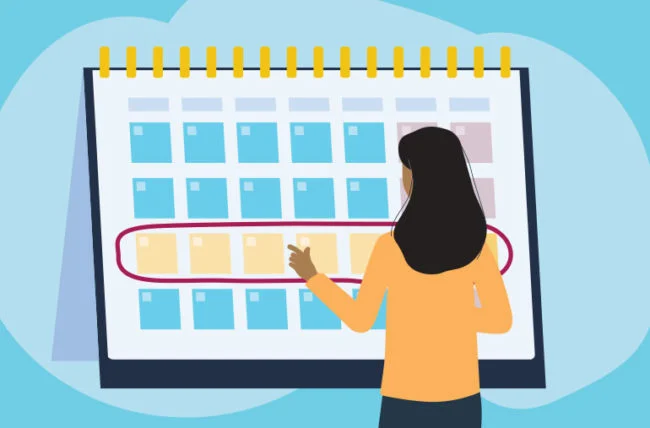
Dr. Higgins suggests that you track your periods. This will allow you to recognize if something is wrong right away. Use an app or a calendar to keep a period journal. These records are valuable to you and your doctor.
Dr. Higgins explains that your doctor will need to know the details of previous periods in order to determine if there is a problem. Dr. Higgins says that a late period can be caused by a minor issue. However, if it happens frequently, you should consult your doctor to rule out any other health issues.